The Fluid Pantheon: Gods of Medieval Japan, Volume 1


The Fluid Pantheon: Gods of Medieval Japan, Volume 1
The Fluid Pantheon: Gods of Medieval Japan, Volume 1
Description
Description
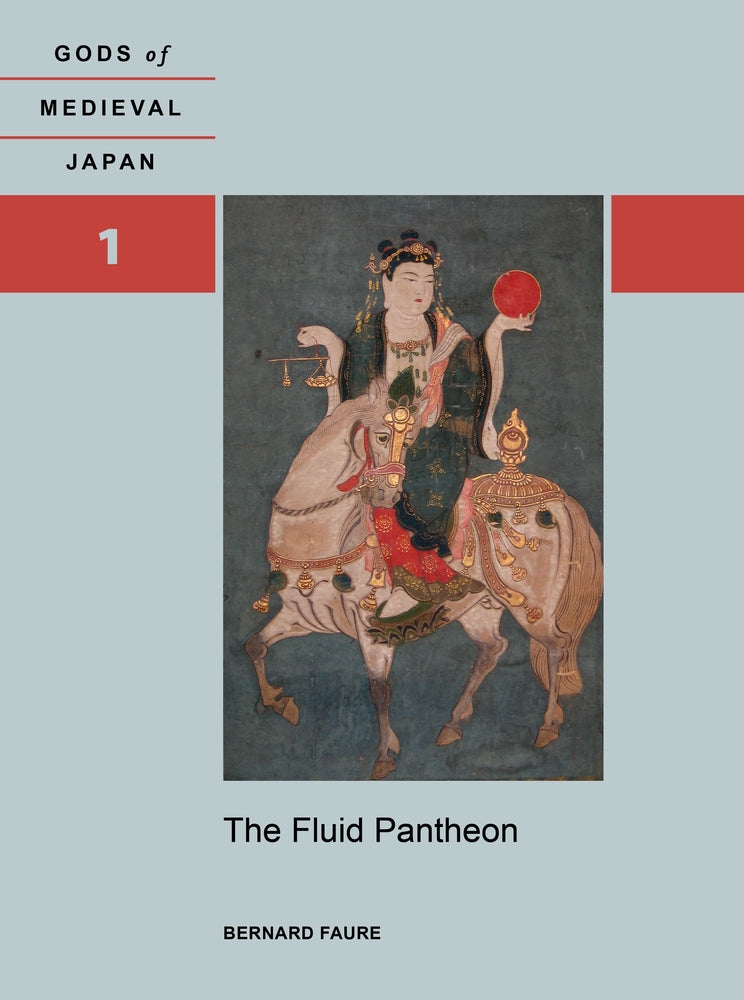
Written by one of the leading scholars of Japanese religion, The Fluid Pantheon is the first installment of a multivolume project that promises to be a milestone in our understanding of the mythico-ritual system of esoteric Buddhism--specifically the nature and roles of deities in the religious world of medieval Japan and beyond. Bernard Faure introduces readers to medieval Japanese religiosity and shows the centrality of the gods in religious discourse and ritual; in doing so he moves away from the usual textual, historical, and sociological approaches that constitute the "method" of current religious studies. The approach considers the gods (including buddhas and demons) as meaningful and powerful interlocutors and not merely as cyphers for social groups or projections of the human mind. Throughout he engages insights drawn from structuralism, post-structuralism, and Actor-network theory to retrieve the "implicit pantheon" (as opposed to the "explicit orthodox pantheon") of esoteric Japanese Buddhism (Mikkyō).
Through a number of case studies, Faure describes and analyzes the impressive mythological and ritual efflorescence that marked the medieval period, not only in the religious domain, but also in the political, artistic, and literary spheres. He displays vast knowledge of his subject and presents his research--much of it in largely unstudied material--with theoretical sophistication. His arguments and analyses assume the centrality of the iconographic record, and so he has brought together in this volume a rich and rare collection of more than 180 color and black-and-white images. This emphasis on iconography and the ways in which it complements, supplements, or deconstructs textual orthodoxy is critical to a fuller comprehension of a set of medieval Japanese beliefs and practices. It also offers a corrective to the traditional division of the field into religious studies, which typically ignores the images, and art history, which oftentimes overlooks their ritual and religious meaning. The Fluid Pantheon and its companion volumes should persuade readers that the gods constituted a central part of medieval Japanese religion and that the latter cannot be reduced to a simplistic confrontation, parallelism, or complementarity between some monolithic teachings known as "Buddhism" and "Shinto." Once these reductionist labels and categories are discarded, a new and fascinating religious landscape begins to unfold.
Critical Reviews
Critical Reviews
The first two installments of Bernard Faure's multivolume Gods of Medieval Japan (Hawaii 2016) represent a milestone in the study of Japanese esoteric Buddhism. . . . most compelling about Faure's work is his consistent focus on Japanese artworks (hundreds of which are presented here in full color), a move that greatly enhances
our understanding of the dizzying number of deities under discussion in ways that textual analysis alone could never do.
Publishing Information
Publishing Information
The Allstora Membership
Membership Perks:
- Save 30% on all online store purchases
- Exclusive access to author's content
- You pay less, but authors still earn double
Membership Terms:
- To access membership discount simply log in and add to cart, discount applied automatically.
- One month free trial, cancel anytime. Membership renews on the 15th of each month.