Sass: Black Women's Humor and Humanity


Sass: Black Women's Humor and Humanity
Sass: Black Women's Humor and Humanity
Description
Description
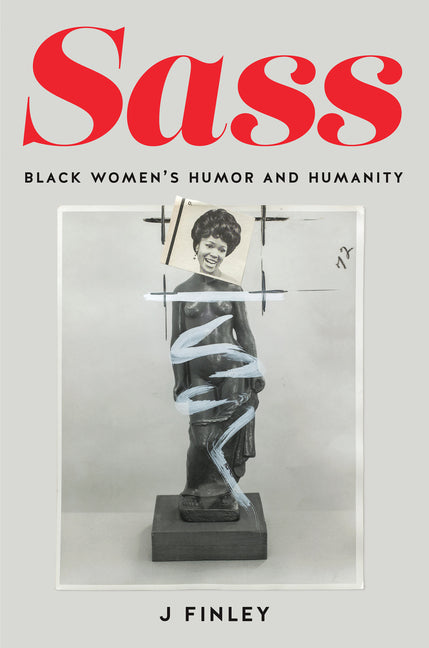
Black women comedians are more visible than ever, performing around the world in physical venues like comedy clubs and festivals, along with appearing in films, streaming specials, and online videos. Across these mediums, humor-and particularly sass-functions as a tool for Black women to articulate and redress cultural, social, and political marginalization.
J Finley theorizes sass as a new critical lens to better understand the power of Black women's humor and humanity and explores how sass functions as a powerful resource in Black women's expressive repertoire. Challenging mainstream assumptions about "sassiness" as an identity or personality trait to which Black women humorists may be reduced, Finley deploys sass to create a new genre of discourse for understanding the ways in which Black women use language, style, gesture, and intent to produce meaning-often humorous-in speaking back to authority. Grounded in an ethnographic approach to Black women's experiences, Finley conducted extensive interviews as well as participant-observation as a critic, audience member, and comic herself to collect and honor the stories that Black women comics tell about themselves. Interdisciplinary and conceptually rigorous, Finley's work shows us how we can and should read Black women's expressions of sass in humor as attempts at social transformation that involve a fundamental critique of power and authority, and a gesture at collective liberation.
J Finley theorizes sass as a new critical lens to better understand the power of Black women's humor and humanity and explores how sass functions as a powerful resource in Black women's expressive repertoire. Challenging mainstream assumptions about "sassiness" as an identity or personality trait to which Black women humorists may be reduced, Finley deploys sass to create a new genre of discourse for understanding the ways in which Black women use language, style, gesture, and intent to produce meaning-often humorous-in speaking back to authority. Grounded in an ethnographic approach to Black women's experiences, Finley conducted extensive interviews as well as participant-observation as a critic, audience member, and comic herself to collect and honor the stories that Black women comics tell about themselves. Interdisciplinary and conceptually rigorous, Finley's work shows us how we can and should read Black women's expressions of sass in humor as attempts at social transformation that involve a fundamental critique of power and authority, and a gesture at collective liberation.
Critical Reviews
Critical Reviews
"Nuanced and creative . . . . an enlightening and rigorous examination of sass as a means of asserting one's power in an oppressive world. It's an insightful study of the politics of humor."--Publishers Weekly
"A brilliant and insightful analysis pf sass as practiced by Black women . . . as a mode of cultural performance, as a genre of discourse, and as a means of understanding the mutually constitutive nature of Black women's humor and humanity. . . . This volume adds to an underrepresented but growing field and convincingly demonstrates the possibility of alternative forms of liberation. . . . Highly recommended."--CHOICE
Publishing Information
Publishing Information
Publisher:
University of North Carolina Press
Pub date:
2024-08-13
Length:
234 pages

The Allstora Membership
Membership Perks:
- Save 30% on all online store purchases
- Exclusive access to author's content
- You pay less, but authors still earn double
Membership Terms:
First Month:
$0.00
Monthly price:
$5.00
- To access membership discount simply log in and add to cart, discount applied automatically.
- One month free trial, cancel anytime. Membership renews on the 15th of each month.