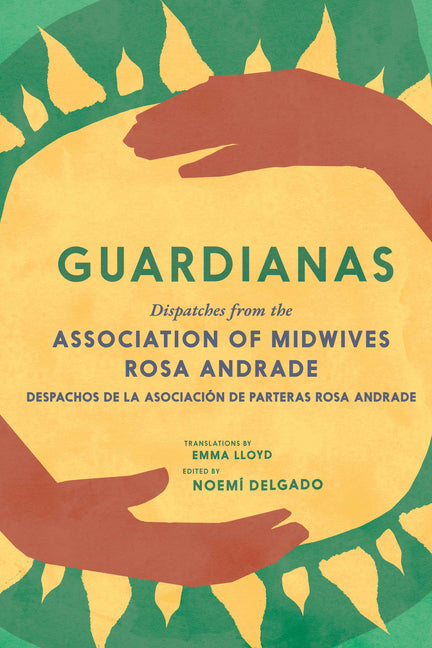
Guardianas: Dispatches from the Association of Midwives Rosa Andrade / Despachos de la Asociación de Parteras Rosa Andrade


Guardianas: Dispatches from the Association of Midwives Rosa Andrade / Despachos de la Asociación de Parteras Rosa Andrade
Guardianas: Dispatches from the Association of Midwives Rosa Andrade / Despachos de la Asociación de Parteras Rosa Andrade
Description
Description
A collection of testimonies from midwives in El Salvador who delivered babies during the twelve-year-long civil war and today fight to protect their ancestral role to care for the reproductive health of their communities. This bilingual edition includes thirty color photographs and five black-and-white illustrations. "An inspiring testament to the indispensable role of midwives in safeguarding life, culture, and community even against formidable odds." --Dorothy Roberts, author of Killing the Black Body "In this book we get to listen to elders, warriors, guides whose love, care and support for the autonomy of people giving birth models the world we deserve." --Alexis Pauline Gumbs, author of Survival Is a Promise: The Eternal Life of Audre Lorde
"A book we need to read, as across the world we face a relentless war against the main conditions of our reproduction." --Silvia Federici, author of Caliban and the Witch and Wages Against Housework
During the twelve-year-long Salvadoran civil war, mothers and guerrilla fighters attended births out of necessity. While fleeing airstrikes, in caves and beneath mango trees, with no electricity or running water, these women became parteras--community midwives--and began to care for pregnant people in rural areas and refugee camps who could not access medical care. In 1994, in the wake of the armed struggle, the Association of Midwives Rosa Andrade (APRA) was born. Compiled from oral histories gathered in 2019 by Salvadoran American birth worker Noemí Delgado, this bilingual anthology weaves together testimonies from twenty members of APRA to tell a collective story of midwifery and community care in revolutionary El Salvador. In Guardianas, the beauty of the testimonies, and the care with which they were collected, come together to safeguard a vision of a world rooted in fierce bravery, dignity, and ancestral wisdom. // Durante los doce años de guerra civil en El Salvador, madres y guerrilleras asistieron a parturientas. Mientras se refugiaban de ataques aéreos, dentro de cuevas y bajo árboles de mango, sin electricidad o agua corriente, estas mujeres vueltas parteras comenzaron a cuidar a personas embarazadas en áreas rurales y campos de refugiados que no podían acceder a cuidado médicos. En 1994, tras la lucha armada, nació la Asociación de Parteras Rosa Andrade (APRA). Compilado de historias orales recolectadas en 2019 por la trabajadora de partos salvadoreña-estadounidense Noemí Delgado, esta antología bilingüe entreteje testimonios de veinte miembros de la APRA para relatar un cuento colectivo de partería y cuidado comunal en El Salvador revolucionario. En Guardianas, la belleza de los testimonios, y el cuidado con el que fueron recolectados, juntos resguardan una visión del mundo enraizado en coraje feroz, dignidad y conocimiento ancestral.
"A book we need to read, as across the world we face a relentless war against the main conditions of our reproduction." --Silvia Federici, author of Caliban and the Witch and Wages Against Housework
During the twelve-year-long Salvadoran civil war, mothers and guerrilla fighters attended births out of necessity. While fleeing airstrikes, in caves and beneath mango trees, with no electricity or running water, these women became parteras--community midwives--and began to care for pregnant people in rural areas and refugee camps who could not access medical care. In 1994, in the wake of the armed struggle, the Association of Midwives Rosa Andrade (APRA) was born. Compiled from oral histories gathered in 2019 by Salvadoran American birth worker Noemí Delgado, this bilingual anthology weaves together testimonies from twenty members of APRA to tell a collective story of midwifery and community care in revolutionary El Salvador. In Guardianas, the beauty of the testimonies, and the care with which they were collected, come together to safeguard a vision of a world rooted in fierce bravery, dignity, and ancestral wisdom. // Durante los doce años de guerra civil en El Salvador, madres y guerrilleras asistieron a parturientas. Mientras se refugiaban de ataques aéreos, dentro de cuevas y bajo árboles de mango, sin electricidad o agua corriente, estas mujeres vueltas parteras comenzaron a cuidar a personas embarazadas en áreas rurales y campos de refugiados que no podían acceder a cuidado médicos. En 1994, tras la lucha armada, nació la Asociación de Parteras Rosa Andrade (APRA). Compilado de historias orales recolectadas en 2019 por la trabajadora de partos salvadoreña-estadounidense Noemí Delgado, esta antología bilingüe entreteje testimonios de veinte miembros de la APRA para relatar un cuento colectivo de partería y cuidado comunal en El Salvador revolucionario. En Guardianas, la belleza de los testimonios, y el cuidado con el que fueron recolectados, juntos resguardan una visión del mundo enraizado en coraje feroz, dignidad y conocimiento ancestral.
About the Author
About the Author
Founded in 1994, the ASSOCIATION OF MIDWIVES ROSA ANDRADE (APRA) is a group of thirty midwives caring for the reproductive health of thousands of people living in thirty-five rural communities in the municipality of Suchitoto, Cuscatlán, El Salvador. Most of the members of APRA either began or continued the work of attending births during the twelve-year-long civil war from 1979 to 1992, when pregnant people in rural areas and guerrilla and refugee camps could not seek medical attention due to the extreme terror inflicted by the US-backed military dictatorship. Rooted in solidarity and a commitment to their communities, the members of APRA continue to care for pregnant, birthing, and postpartum families today. The current members of APRA include: María Melia Martínez Flamenco, Bonifica Ascencio García, María Amalia Molina Menjivar, Fredelinda Antonia Recinos de Cerón, Vicenta Martínez, Ángela Luz Barahona de Ávalos, Cecilia de María Rivera de López, Francisca Catalina Blanco Hernández, Ana Teresa Ávalos, María Higinia "Patricia" Hernández, Tomasa Jovita Torres, Natividad Escobar de Henriquez, Lucía Rutilia González, María Martina Lucero, María Dolores Hernández de Rivera, Vilma Coreas Guzmán, Reina Marlenis Escobar Figueroa, María de los Ángeles Acosta Ardón, Sandra Maricela Flores, María Magdalena Rodas Arias, Dolores Margarita Marroquín de Hernández, Estela Villacorta Rivas, Angélica de la Paz Martínez León, Morena Elí Orellana Menjivar, Sonia Alicia Cruz Montoya, Yessenia de Jesús Canjura Trejo, Pedrina Ángela Calderón, María Antonia Landaverde, Emilia Marinet Sánchez, and Marina Martínez.
Residence: Suchitoto, El Salvador. NOEMÍ DELGADO is a birth worker, body worker, and childbirth educator. Born in California, she began her birthwork journey while living and working with midwives in her family's homeland of El Salvador. She accompanied the Association of Midwives Rosa Andrade during a Public Health Fulbright Fellowship in 2019. She is codirector of Matronas: The Struggle to Protect Birth in El Salvador (2021), which was an Official Selection at the San Diego Latino Film Festival and the Oakland Short Film Festival and was nominated for Best Short Documentary at the fifteenth Annual BronzeLens Film Festival. Delgado is dedicated to uplifting ancestral wisdom and challenging the systems that attempt to erase it; Guardianas and Matronas are a part of that effort.
Residence: San Francisco, CA. EMMA LLOYD is a translator and writer working across genres--from poetry to narrative to film subtitles. Her ongoing translation of Pedro Lemebel's De perlas y cicatrices (Of Pearls and Scars) won a 2019 PEN/Heim Translation Fund Grant. She is the translator of Julieta Vittore Dutto's debut poetry collection, Un lugar interminable (An Endless Place) (2022), as well as subtitles for Tatiana Huezo's Prayers for the Stolen (2021) and Mattis Appelqvist Dalton and Matteo Robert Morales's The Time of the Fireflies (2022). She has a master's from the Graduate Center at the City University of New York and is currently pursuing a PhD in Comparative Literature at the University of California, Berkeley. Alongside her translation work, Emma works at Safe Passage Project, an immigration justice organization.
Residence: Berkeley, CA. LUZ DEL CARMEN SALAMA-TOBAR is a Salvadoran artist, photographer, and organizer. Born in Sonsonate, El Salvador, land of the Náhuat-Pipil people, and raised in Falls Church, Virginia, after immigrating to the US, her work centers around her community. She received her BFA in Photography at the Maryland Institute College of Art in 2018 and was awarded a Fulbright Fellowship in 2019, during which time she taught as a visiting scholar at the University Don Bosco in San Salvador and began work with Kuna Nawat, an early immersion language program taught by the last native speakers of the Náhuat language. She is cofounder of the Virginia-based abolitionist organization La ColectiVA and is currently pursuing her masters in photography at Virginia Commonwealth University School of the Arts.
Residence: Washington, D.C.
Residence: Suchitoto, El Salvador. NOEMÍ DELGADO is a birth worker, body worker, and childbirth educator. Born in California, she began her birthwork journey while living and working with midwives in her family's homeland of El Salvador. She accompanied the Association of Midwives Rosa Andrade during a Public Health Fulbright Fellowship in 2019. She is codirector of Matronas: The Struggle to Protect Birth in El Salvador (2021), which was an Official Selection at the San Diego Latino Film Festival and the Oakland Short Film Festival and was nominated for Best Short Documentary at the fifteenth Annual BronzeLens Film Festival. Delgado is dedicated to uplifting ancestral wisdom and challenging the systems that attempt to erase it; Guardianas and Matronas are a part of that effort.
Residence: San Francisco, CA. EMMA LLOYD is a translator and writer working across genres--from poetry to narrative to film subtitles. Her ongoing translation of Pedro Lemebel's De perlas y cicatrices (Of Pearls and Scars) won a 2019 PEN/Heim Translation Fund Grant. She is the translator of Julieta Vittore Dutto's debut poetry collection, Un lugar interminable (An Endless Place) (2022), as well as subtitles for Tatiana Huezo's Prayers for the Stolen (2021) and Mattis Appelqvist Dalton and Matteo Robert Morales's The Time of the Fireflies (2022). She has a master's from the Graduate Center at the City University of New York and is currently pursuing a PhD in Comparative Literature at the University of California, Berkeley. Alongside her translation work, Emma works at Safe Passage Project, an immigration justice organization.
Residence: Berkeley, CA. LUZ DEL CARMEN SALAMA-TOBAR is a Salvadoran artist, photographer, and organizer. Born in Sonsonate, El Salvador, land of the Náhuat-Pipil people, and raised in Falls Church, Virginia, after immigrating to the US, her work centers around her community. She received her BFA in Photography at the Maryland Institute College of Art in 2018 and was awarded a Fulbright Fellowship in 2019, during which time she taught as a visiting scholar at the University Don Bosco in San Salvador and began work with Kuna Nawat, an early immersion language program taught by the last native speakers of the Náhuat language. She is cofounder of the Virginia-based abolitionist organization La ColectiVA and is currently pursuing her masters in photography at Virginia Commonwealth University School of the Arts.
Residence: Washington, D.C.
Critical Reviews
Critical Reviews
"Guardianas documents the efforts and struggles that midwives in El Salvador have been making to help women to be in control of birth-giving and refuse hospitalization. Built through the memories of women who lived and worked through the 'counterinsurgency' war, Guardianas is a powerful, inspiring testimony of communal solidarity and resistance. It is a book we need to read, as across the world we face a relentless war against the main conditions of our reproduction."
--Silvia Federici, author of Caliban and the Witch and Wages Against Housework "With no running water, in the rain, in the dark, under gunfire, by a mango tree, next to a wood fire . . . the midwives or parteras of El Salvador have persisted since before the brutal civil war, safely assisting birthing mothers. Yet since then, despite doctors and hospitals being unable to replace the parteras' compassionate community service, partería has been pushed aside by the healthcare system. This passionate project is the tribute the parteras deserve and a call to reforms that will far better serve both midwives and mothers."
--Deirdre English, coauthor of Witches, Midwives, & Nurses: A History of Women Healers "Through deeply personal testimonies, Guardianas tells the remarkable story of the midwives of APRA, who provided vital care during El Salvador's Civil War and continue to champion holistic health and transcendental solidarity today. This book powerfully celebrates their resilience, sacrifices, and enduring commitment to preserving ancestral practices in the face of violent repression. Guardianas stands as an inspiring testament to the indispensable role of midwives in safeguarding life, culture, and community even against formidable odds."
--Dorothy Roberts, author of Killing the Black Body "Guardianas offers us back the listening that has been stolen from us by medicalized birth systems and alienated healthcare. In this book we get to listen to elders, warriors, guides whose love, care and support for the autonomy of people giving birth models the world we deserve."
--Alexis Pauline Gumbs, author of Survival Is a Promise: The Eternal Life of Audre Lorde and M Archive: After the End of the World "Guardianas is a beautiful homage to the pivotal role parteras have played throughout Central American history. Midwives are the engines of communities, engines that run on love and trust. No government or medical school should ever think that midwives are the cause of child mortality. I hope those opposed to parteras read this book, I know they will forever change their perspectives. I needed this book to exist, I'm a different person after reading these important testimonies rooted in Indigenous wisdom."
--Javier Zamora, New York Times bestselling author of SOLITO
"For survivors and descendants of colonial violence, what is more miraculous than the birth of a child, whose first breath holds the possibility of a future that is free? This powerful, poignant collection of testimonies by El Salvador's midwives, who have lived through the grave horror of war, document their courageous work of ushering in new life, in a land where the people have known mass death. Their words defy the patramyths of power built on the erasure of Indigenous people. Their truth, their knowledge, and their immense love for their people comes alive in Guardianas."
--Tanaïs, author of the Kirkus Prize-winning In Sensorium: Notes for My People "This is a book about cultural preservation and feminist labor, about safety and access, about whose histories get celebrated and whose get suppressed. These testimonies show the Salvadoran Civil War from an angle that is not often discussed. It is an homage to the women who have stepped up to serve their communities when nobody else would."
--Christopher Soto, author of Diaries of a Terrorist and editor of Nepantla: An Anthology Dedicated to Queer Poets of Color "Guardianas is a riveting, gritty, and extraordinary collection of testimonies to read. It's both an understanding of the great perils faced not just in El Salvador, but in the Global South, under the shadow of the dark machinations of colonization--as well as the powerful depiction of the internal strength of womanhood. This book is about the resilience of mothers and caretakers, like the great Salvadoran laborers and farmers who toil the land, these brave women protect and herald in new life. The cycle of death is so present in these pages, but the violence of the world around them doesn't shift the priority of the work, they are steadfast, moving with grace, sharing the bloody realities of birth, life and death. Guardianas is a prayer, it is a powerful and necessary book."
--Fariha Róisín, author of Who Is Wellness For? and Survival Takes a Wild Imagination
--Silvia Federici, author of Caliban and the Witch and Wages Against Housework "With no running water, in the rain, in the dark, under gunfire, by a mango tree, next to a wood fire . . . the midwives or parteras of El Salvador have persisted since before the brutal civil war, safely assisting birthing mothers. Yet since then, despite doctors and hospitals being unable to replace the parteras' compassionate community service, partería has been pushed aside by the healthcare system. This passionate project is the tribute the parteras deserve and a call to reforms that will far better serve both midwives and mothers."
--Deirdre English, coauthor of Witches, Midwives, & Nurses: A History of Women Healers "Through deeply personal testimonies, Guardianas tells the remarkable story of the midwives of APRA, who provided vital care during El Salvador's Civil War and continue to champion holistic health and transcendental solidarity today. This book powerfully celebrates their resilience, sacrifices, and enduring commitment to preserving ancestral practices in the face of violent repression. Guardianas stands as an inspiring testament to the indispensable role of midwives in safeguarding life, culture, and community even against formidable odds."
--Dorothy Roberts, author of Killing the Black Body "Guardianas offers us back the listening that has been stolen from us by medicalized birth systems and alienated healthcare. In this book we get to listen to elders, warriors, guides whose love, care and support for the autonomy of people giving birth models the world we deserve."
--Alexis Pauline Gumbs, author of Survival Is a Promise: The Eternal Life of Audre Lorde and M Archive: After the End of the World "Guardianas is a beautiful homage to the pivotal role parteras have played throughout Central American history. Midwives are the engines of communities, engines that run on love and trust. No government or medical school should ever think that midwives are the cause of child mortality. I hope those opposed to parteras read this book, I know they will forever change their perspectives. I needed this book to exist, I'm a different person after reading these important testimonies rooted in Indigenous wisdom."
--Javier Zamora, New York Times bestselling author of SOLITO
"For survivors and descendants of colonial violence, what is more miraculous than the birth of a child, whose first breath holds the possibility of a future that is free? This powerful, poignant collection of testimonies by El Salvador's midwives, who have lived through the grave horror of war, document their courageous work of ushering in new life, in a land where the people have known mass death. Their words defy the patramyths of power built on the erasure of Indigenous people. Their truth, their knowledge, and their immense love for their people comes alive in Guardianas."
--Tanaïs, author of the Kirkus Prize-winning In Sensorium: Notes for My People "This is a book about cultural preservation and feminist labor, about safety and access, about whose histories get celebrated and whose get suppressed. These testimonies show the Salvadoran Civil War from an angle that is not often discussed. It is an homage to the women who have stepped up to serve their communities when nobody else would."
--Christopher Soto, author of Diaries of a Terrorist and editor of Nepantla: An Anthology Dedicated to Queer Poets of Color "Guardianas is a riveting, gritty, and extraordinary collection of testimonies to read. It's both an understanding of the great perils faced not just in El Salvador, but in the Global South, under the shadow of the dark machinations of colonization--as well as the powerful depiction of the internal strength of womanhood. This book is about the resilience of mothers and caretakers, like the great Salvadoran laborers and farmers who toil the land, these brave women protect and herald in new life. The cycle of death is so present in these pages, but the violence of the world around them doesn't shift the priority of the work, they are steadfast, moving with grace, sharing the bloody realities of birth, life and death. Guardianas is a prayer, it is a powerful and necessary book."
--Fariha Róisín, author of Who Is Wellness For? and Survival Takes a Wild Imagination
Publishing Information
Publishing Information
Publisher:
Seven Stories Press
Pub date:
2025-06-17
Length:
272 pages
The Allstora Membership
Membership Perks:
- Save 30% on all online store purchases
- Exclusive access to author's content
- You pay less, but authors still earn double
Membership Terms:
First Month:
$0.00
Monthly price:
$5.00
- To access membership discount simply log in and add to cart, discount applied automatically.
- One month free trial, cancel anytime. Membership renews on the 15th of each month.