Escaping Salem: The Other Witch Hunt of 1692


Escaping Salem: The Other Witch Hunt of 1692
Escaping Salem: The Other Witch Hunt of 1692
Description
Description
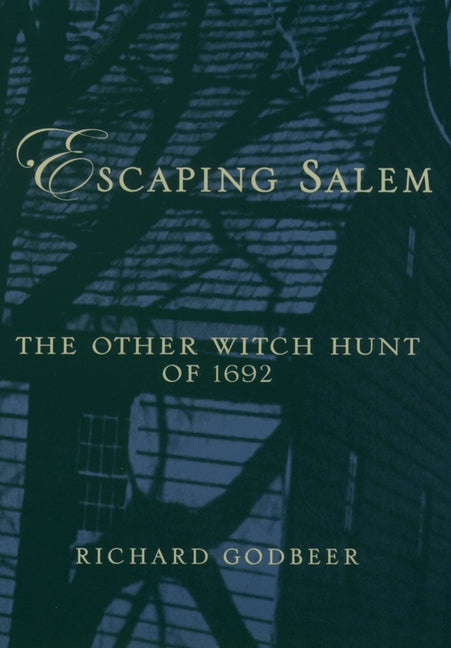
Few events in American history are as well remembered as the Salem Witch Trials of 1692. But there was another witch hunt that year, in Stamford, Connecticut, that has never been examined in depth. Now Richard Godbeer describes this "other witch hunt" in a concise, fascinating narrative that illuminates the colonial world and shatters the stereotype of early New Englanders as quick to accuse and condemn. That stereotype originates with Salem, which was in many ways unlike other outbreaks of witch-hunting in the region.
Drawing on eye-witness testimony, Godbeer tells the story of Kate Branch, a seventeen-year-old afflicted by strange visions and given to blood-chilling wails of pain and fright. Branch accused several women of bewitching her, two of whom were put on trial for witchcraft. The book takes us inside the courtroom--and inside the minds of the surprisingly skeptical Stamford townfolk. Was the pain and screaming due to natural causes, or to supernatural causes? Was Branch simply faking the symptoms? And if she was bewitched, why believe her specific accusations, since her information came from demons who might well be lying? For the judges, Godbeer shows, the trial was a legal thicket. All agreed that witches posed a real and serious threat, but proving witchcraft (an invisible crime) in court was another matter. The court in Salem had become mired in controversy over its use of dubious evidence. In an intriguing passage, Godbeer examines Magistrate Jonathan Selleck's notes on how to determine the guilt of someone accused of witchcraft--an illuminating look at what constituted proof of witchcraft at the time. The stakes were high--if found guilty, the two accused women would be hanged.
In the afterword, Godbeer explains how he used the trial evidence to build his narrative, an inside look at the historian's craft that enhances this wonderful account of life in colonial New England.
Drawing on eye-witness testimony, Godbeer tells the story of Kate Branch, a seventeen-year-old afflicted by strange visions and given to blood-chilling wails of pain and fright. Branch accused several women of bewitching her, two of whom were put on trial for witchcraft. The book takes us inside the courtroom--and inside the minds of the surprisingly skeptical Stamford townfolk. Was the pain and screaming due to natural causes, or to supernatural causes? Was Branch simply faking the symptoms? And if she was bewitched, why believe her specific accusations, since her information came from demons who might well be lying? For the judges, Godbeer shows, the trial was a legal thicket. All agreed that witches posed a real and serious threat, but proving witchcraft (an invisible crime) in court was another matter. The court in Salem had become mired in controversy over its use of dubious evidence. In an intriguing passage, Godbeer examines Magistrate Jonathan Selleck's notes on how to determine the guilt of someone accused of witchcraft--an illuminating look at what constituted proof of witchcraft at the time. The stakes were high--if found guilty, the two accused women would be hanged.
In the afterword, Godbeer explains how he used the trial evidence to build his narrative, an inside look at the historian's craft that enhances this wonderful account of life in colonial New England.
Critical Reviews
Critical Reviews
"Escaping Salem will engage every reader who has fallen under the spell of witchcraft's history in New England. But beware: still deeper enchantment awaits as Richard Godbeer unfolds his riveting tale of how ordinary men and women struggled to make sense of the wonders and terrors at work in their Connecticut village."--Christine Leigh Heyrman, University of Delaware"Richard Godbeer's Escaping Salem is a thoughtful and lively retelling of a 'forgotten' witchcraft case. The strong story line is nicely balanced with astute commentary on the background and context. Indeed Godbeer uses the case to open up a broad vista of early New England life at ground level. And, in doing so, he shows a balance of interests and concerns that differs significantly from the endlessly hyped (but somewhat atypical) picture of the 'Salem witch-craze' in exactly the same year."--John Demos, Yale University
Publishing Information
Publishing Information
Publisher:
Oxford University Press
Pub date:
2005-01-06
Length:
200 pages
The Allstora Membership
Membership Perks:
- Save 30% on all online store purchases
- Exclusive access to author's content
- You pay less, but authors still earn double
Membership Terms:
First Month:
$0.00
Monthly price:
$5.00
- To access membership discount simply log in and add to cart, discount applied automatically.
- One month free trial, cancel anytime. Membership renews on the 15th of each month.