Education of Blacks in the South, 1860-1935


Education of Blacks in the South, 1860-1935
Education of Blacks in the South, 1860-1935
Description
Description
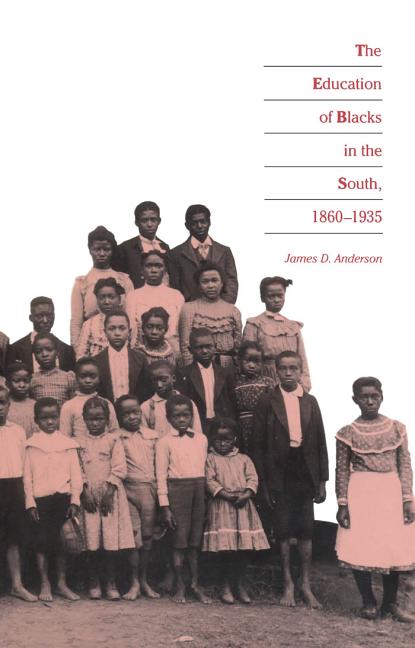
James Anderson critically reinterprets the history of southern black education from Reconstruction to the Great Depression. By placing black schooling within a political, cultural, and economic context, he offers fresh insights into black commitment to education, the peculiar significance of Tuskegee Institute, and the conflicting goals of various philanthropic groups, among other matters.
Initially, ex-slaves attempted to create an educational system that would support and extend their emancipation, but their children were pushed into a system of industrial education that presupposed black political and economic subordination. This conception of education and social order--supported by northern industrial philanthropists, some black educators, and most southern school officials--conflicted with the aspirations of ex-slaves and their descendants, resulting at the turn of the century in a bitter national debate over the purposes of black education. Because blacks lacked economic and political power, white elites were able to control the structure and content of black elementary, secondary, normal, and college education during the first third of the twentieth century. Nonetheless, blacks persisted in their struggle to develop an educational system in accordance with their own needs and desires.
Initially, ex-slaves attempted to create an educational system that would support and extend their emancipation, but their children were pushed into a system of industrial education that presupposed black political and economic subordination. This conception of education and social order--supported by northern industrial philanthropists, some black educators, and most southern school officials--conflicted with the aspirations of ex-slaves and their descendants, resulting at the turn of the century in a bitter national debate over the purposes of black education. Because blacks lacked economic and political power, white elites were able to control the structure and content of black elementary, secondary, normal, and college education during the first third of the twentieth century. Nonetheless, blacks persisted in their struggle to develop an educational system in accordance with their own needs and desires.
Critical Reviews
Critical Reviews
In its unmatched survey of the primary sources of black education, its provocative judgments, and its ability to recapture the voices of southern blacks striving for educational equity despite great obstacles, The Education of Blacks in the South stands as a notable scholarly achievement."--Georgia Historical Quarterly
Publishing Information
Publishing Information
Publisher:
University of North Carolina Press
Pub date:
1988-09-09
Length:
384 pages
The Allstora Membership
Membership Perks:
- Save 30% on all online store purchases
- Exclusive access to author's content
- You pay less, but authors still earn double
Membership Terms:
First Month:
$0.00
Monthly price:
$5.00
- To access membership discount simply log in and add to cart, discount applied automatically.
- One month free trial, cancel anytime. Membership renews on the 15th of each month.