Citizens of a Stolen Land: A Ho-Chunk History of the Nineteenth-Century United States


Citizens of a Stolen Land: A Ho-Chunk History of the Nineteenth-Century United States
Citizens of a Stolen Land: A Ho-Chunk History of the Nineteenth-Century United States
Description
Description
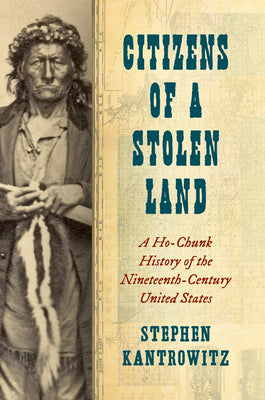
This concise and revealing history reconsiders the Civil War era by centering one Native American tribe's encounter with citizenship. In 1837, eleven years before Wisconsin's admission as a state, representatives of the Ho-Chunk people yielded under immense duress and signed a treaty that ceded their remaining ancestral lands to the U.S. government. Over the four decades that followed, as "free soil" settlement repeatedly demanded their further expulsion, many Ho-Chunk people lived under the U.S. government's policies of "civilization," allotment, and citizenship. Others lived as outlaws, evading military campaigns to expel them and adapting their ways of life to new circumstances. After the Civil War, as Reconstruction's vision of nonracial, national, birthright citizenship excluded most Native Americans, the Ho-Chunk who remained in their Wisconsin homeland understood and exploited this contradiction. Professing eagerness to participate in the postwar nation, they gained the right to remain in Wisconsin as landowners and voters while retaining their language, culture, and identity as a people.
This history of Ho-Chunk sovereignty and citizenship offer a bracing new perspective on citizenship's perils and promises, the way the broader nineteenth-century conflict between "free soil" and slaveholding expansion shaped Indigenous life, and the continuing impact of Native people's struggles and claims on U.S. politics and society.
This history of Ho-Chunk sovereignty and citizenship offer a bracing new perspective on citizenship's perils and promises, the way the broader nineteenth-century conflict between "free soil" and slaveholding expansion shaped Indigenous life, and the continuing impact of Native people's struggles and claims on U.S. politics and society.
Critical Reviews
Critical Reviews
As historians seek to better understand the Civil War's wide-ranging consequences, Kantrowitz provides a model for understanding how the war challenged and changed ideas about race and citizenship--and how marginalized groups used the conflict to assert their rights as Americans."--The Civil War Monitor
Publishing Information
Publishing Information
Publisher:
University of North Carolina Press
Pub date:
2023-04-04
Length:
238 pages

The Allstora Membership
Membership Perks:
- Save 30% on all online store purchases
- Exclusive access to author's content
- You pay less, but authors still earn double
Membership Terms:
First Month:
$0.00
Monthly price:
$5.00
- To access membership discount simply log in and add to cart, discount applied automatically.
- One month free trial, cancel anytime. Membership renews on the 15th of each month.