Bismarck's War: The Franco-Prussian War and the Making of Modern Europe


Bismarck's War: The Franco-Prussian War and the Making of Modern Europe
Bismarck's War: The Franco-Prussian War and the Making of Modern Europe
Description
Description
'Compassionate and thought-provoking history' Daily Telegraph
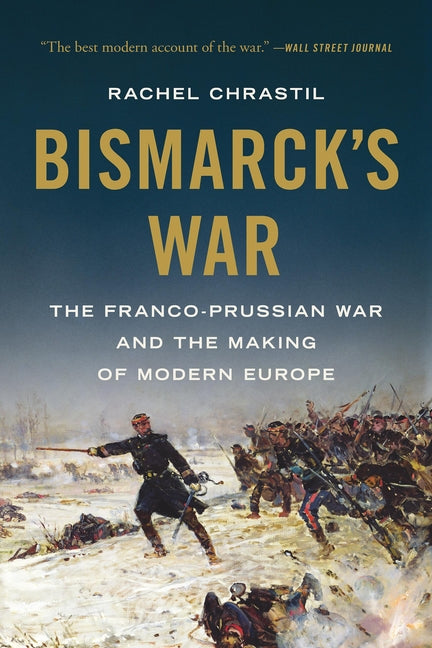
'Superb on the human consequences of war, ravishing in its evocations of wartime life' The Times 'Fresh and compelling ... a tour-de-force' David A. Bell Less than a month after it marched into France in summer 1870, the Prussian army had devastated its opponents, captured Napoleon III and wrecked all assumptions about Europe's pecking order. Other countries looked on in helpless amazement. Pushing aside further French resistance, a new German Empire was proclaimed (as a deliberate humiliation) in the Palace of Versailles, leaving the French to face civil war in Paris, reparations and the loss of Alsace and Lorraine. Bismarck's War tells the story of one of the most shocking reversals of fortune in modern European history. The culmination of a globally violent decade, the Franco-Prussian War was deliberately engineered by Bismarck, both to destroy French power and to unite Germany. It could not have worked better, but it also had lurking inside it the poisonous seeds of all the disasters that would ravage the twentieth century. Drawing on a remarkable variety of sources, Chrastil's book explores the military, technological, political and social events of the war, its human cost and the way that the sheer ferocity of war, however successful, has profound consequences for both victors and victims.
About the Author
About the Author
Rachel Chrastil is a professor of history and provost and chief academic officer at Xavier University in Cincinnati and a former Fulbright scholar. The author of Organizing for War, The Siege of Strasbourg, and How to Be Childless, she lives in Cincinnati, Ohio.
Critical Reviews
Critical Reviews
"A most engaging book, distinguished by sharp insight, powerful characterization and a strong narrative flow. It is the best modern account of the war."--Wall Street Journal
"A vivid and informative story of these events and their consequences...Chrastil's compassionate and thought-provoking history does justice to both sides of this legacy."
--Daily Telegraph "This is an impressive work, fluent, wide-ranging, vivid in its use of sources, and central to an understanding of Europe's subsequent history."
--Spectator "Chrastil has clearly not written one of those increasingly common recent histories of war that seem to have no battles in them. She presents a skillful account of military mechanics. Still, where Chrastil shines is in providing a broader societal portrait of the conflict, particularly in France."--Washington Examiner "A welcome new addition to the literature...[Chrastil's] book is likely to become the standard account of the war in English."
--Literary Review "A brisk, invigoratingly intelligent read, full of the colorful personalities that governed the war but also full of the million anonymous civilian sufferers on French soil...Bismarck's War tells this grim story with superb narrative energy." --Open Letters Review "Engrossing narrative history that offers a great overview of the Franco-Prussian War and includes many well-selected and surprising details that have the potential to diversify and change perceptions of this important conflict even in readers who know the era well."
--Engelsberg Ideas "One of those rare history books that truly delivers on this kind of ambitious promise." --Quillette "Marshaling a tremendous amount of information, Chrastil clearly demonstrates how this conflict set the stage for the world-shattering violence of the 20th century. It's an outstanding synthesis of a complex and vicious war."
--Publishers Weekly "Rachel Chrastil colorfully describes how the Franco-Prussian War destroyed the long European peace established after Napoleon's defeat in 1815. Beginning as a midsummer cabinet war between monarchs, one of them Napoleon's nephew, Bismarck's invasion of France bogged down in winter rain and snow, and became a rancorous war of peoples that kindled the inferno of World War I."
--Geoffrey Wawro, author of The Franco-Prussian War and A Mad Catastrophe "Rachel Chrastil has written a fresh and compelling history of the most important European war between Waterloo and World War I. In rich and engaging detail, she shows how it laid much of the foundation for the wars of the twentieth century, even as it was seen at the time, and subsequently remembered, as a relatively conventional conflict. A tour-de-force."
--David A. Bell, Princeton University "Bismarck's War brings the Franco-Prussian War to life through the words and deeds of participants both on and off the battlefield. Rachel Chrastil's fascinating examination of the conflict compellingly narrates its military and political dimensions, and it puts the war in a global context, emphasizing its human cost and the international response to the humanitarian crisis it created. An engrossing, compassionate, and critical interrogation of a decisive historical event."
--Carolyn J. Eichner, author of The Paris Commune "Chrastil tells the story of the war very well, skillfully weaving together its military, political, and social aspects. Her descriptions of key battles are admirably clear and accessible."--American Historical Review
--Daily Telegraph "This is an impressive work, fluent, wide-ranging, vivid in its use of sources, and central to an understanding of Europe's subsequent history."
--Spectator "Chrastil has clearly not written one of those increasingly common recent histories of war that seem to have no battles in them. She presents a skillful account of military mechanics. Still, where Chrastil shines is in providing a broader societal portrait of the conflict, particularly in France."--Washington Examiner "A welcome new addition to the literature...[Chrastil's] book is likely to become the standard account of the war in English."
--Literary Review "A brisk, invigoratingly intelligent read, full of the colorful personalities that governed the war but also full of the million anonymous civilian sufferers on French soil...Bismarck's War tells this grim story with superb narrative energy." --Open Letters Review "Engrossing narrative history that offers a great overview of the Franco-Prussian War and includes many well-selected and surprising details that have the potential to diversify and change perceptions of this important conflict even in readers who know the era well."
--Engelsberg Ideas "One of those rare history books that truly delivers on this kind of ambitious promise." --Quillette "Marshaling a tremendous amount of information, Chrastil clearly demonstrates how this conflict set the stage for the world-shattering violence of the 20th century. It's an outstanding synthesis of a complex and vicious war."
--Publishers Weekly "Rachel Chrastil colorfully describes how the Franco-Prussian War destroyed the long European peace established after Napoleon's defeat in 1815. Beginning as a midsummer cabinet war between monarchs, one of them Napoleon's nephew, Bismarck's invasion of France bogged down in winter rain and snow, and became a rancorous war of peoples that kindled the inferno of World War I."
--Geoffrey Wawro, author of The Franco-Prussian War and A Mad Catastrophe "Rachel Chrastil has written a fresh and compelling history of the most important European war between Waterloo and World War I. In rich and engaging detail, she shows how it laid much of the foundation for the wars of the twentieth century, even as it was seen at the time, and subsequently remembered, as a relatively conventional conflict. A tour-de-force."
--David A. Bell, Princeton University "Bismarck's War brings the Franco-Prussian War to life through the words and deeds of participants both on and off the battlefield. Rachel Chrastil's fascinating examination of the conflict compellingly narrates its military and political dimensions, and it puts the war in a global context, emphasizing its human cost and the international response to the humanitarian crisis it created. An engrossing, compassionate, and critical interrogation of a decisive historical event."
--Carolyn J. Eichner, author of The Paris Commune "Chrastil tells the story of the war very well, skillfully weaving together its military, political, and social aspects. Her descriptions of key battles are admirably clear and accessible."--American Historical Review
Publishing Information
Publishing Information
Publisher:
Basic Books
Pub date:
2025-03-04
Length:
512 pages
The Allstora Membership
Membership Perks:
- Save 30% on all online store purchases
- Exclusive access to author's content
- You pay less, but authors still earn double
Membership Terms:
First Month:
$0.00
Monthly price:
$5.00
- To access membership discount simply log in and add to cart, discount applied automatically.
- One month free trial, cancel anytime. Membership renews on the 15th of each month.