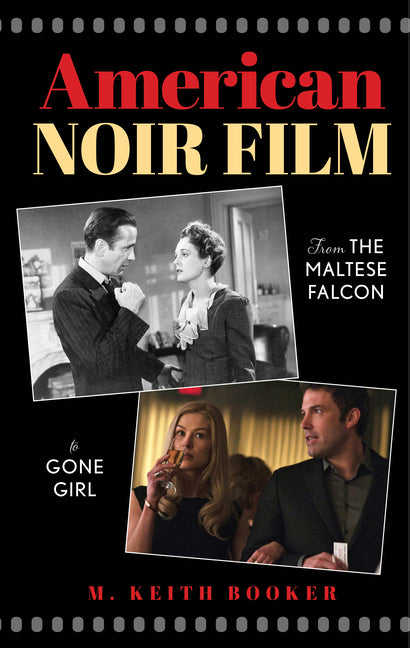
American Noir Film: From The Maltese Falcon to Gone Girl


American Noir Film: From The Maltese Falcon to Gone Girl
American Noir Film: From The Maltese Falcon to Gone Girl
Description
Description
Publishers Weekly praises this deep dive into classic noir films, noting, "Cinephiles will be enthralled." Booklist calls it a "riveting history of the film noir genre" in a starred review, saying, "This is one of the best, best written, most insightful analyses of film noir, and it demands to be read by fans of film history."
About the Author
About the Author
M. Keith Booker is the author or editor of over sixty books including Mad Men A Cultural History (Rowman & Littlefield, 2016), Tony Soprano's America: Gangsters, Guns, and Money (Rowman & Littlefield, 2017), Star Trek A Cultural History (Rowman & Littlefield, 2018), and The Coen Brothers' America (Rowman & Littlefield, 2019). He is professor of English at the University of Arkansas.
Critical Reviews
Critical Reviews
From the author of The Historical Dictionary of Science Fiction Cinema and Postmodern Hollywood (2020), comes this riveting history of the film noir genre. The first wave of the noir film genre began with 1941rsquo;s The Maltese Falcon and ended with 1958rsquo;s Touch of Evil; but, as Booker argues persuasively, this was only the beginning of film noir. Later came the neo-noir films (eg., Chinatown, 1974) and the revisionary noirs (Basic Instinct, 1992), which incorporated key elements of the noir tradition but took the themes in new directions. Noir came about in part because some German filmmakersmdash;Fritz Lang, Billy Wilder, Otto Preminger, and othersmdash;fled Hitlerrsquo;s Germany and came to the United States; the genre got its name from French film critics, who were searching for something that unified the various films coming out of the U.S. that tackled subjects forbidden by the Production Code through the use of shadow and subtext. The book contains plot summaries, but this is not merely a book full of plot summaries. This is one of the best, best written, most insightful analyses of film noir, and it demands to be read by fans of film history.
This perceptive history from Booker traces film noirrsquo;s enduring influence on American cinema from its 1940s origins through the present. According to Booker, the genre drew from German expressionismrsquo;s #39;inventive use of light and shadows#39; to express wartime malaise and disillusionment with the American Dream. Tracing noirrsquo;s evolution through exegesis of Double Indemnity, Blue Velvet, Inherent Vice, and other films, Booker argues that 1941rsquo;s The Maltese Falcon aimed to rebut #39;saccharine#39; standard Hollywood fare by depicting life as a #39;ruthless dog-eat-dog pursuit of wealth.#39; The fall of the Motion Picture Production Code in the late rsquo;60s produced a wave of #39;neo-noir#39; films (Chinatown and Body Heat principally among them) freed from restrictions on ridiculing the law or showing sympathy with criminals, allowing filmmakers to portray the world as even bleaker and more corrupt than the original noirs had. More recent films create meaning by toying with noir conventions, Booker contends, suggesting that by focusing Gone Girl on a femme fatale who ultimately prevails, director David Fincher implicitly indicts early noirs for their inability to envision a female characterrsquo;s successful challenge to patriarchy. By putting noirs from across film history in conversation, Bookerrsquo;s smart commentary sheds light on how the genre has been retooled and repurposed according to changing attitudes. Cinephiles will be enthralled.
This is a neatly structured and superbly argued study of film noir from the 1940s to the present day. Booker develops a trajectory that leads from classic noir films like The Maltese Falcon to neo-noir efforts like Chinatown to what he calls ldquo;revisionary noir, rdquo; movies (like Inherent Vice and Uncut Gems) that push the genrersquo;s tropes to their limits in critical and transformative ways. The book offers consistently illuminating discussions of a wide range of topics, from the gender politics of noir to the way the genre engages with historical events and contexts, and Booker has a magisterial command of the relevant primary and secondary texts. American Noir Film is highly recommended to anyone interested in the development of this important and complex cinematic artform.
M. Keith Booker#39;s new book, American Noir Film, offers a fascinating and beguiling trip into the dark heart of American noir. Impressive in both its breadth and depth, it shines a light on some of the most remarkable films that have emerged from Hollywood since the 1940s, all the way up until the present day. It is a book to be savored and one not to be missed.
American Noir Film is a lucid and thoughtful introduction to film noir and its neo- and revisionary variants. Throughout, Booker expertly periodizes film noir and its various tropes, supported by careful close readings of key films. This is an essential read for students and experts alike who wish to learn more about film noir.
Film noir is probably the most beloved of old Hollywood genres. In this deep and probing book, M. Keith Booker looks not only at the classics of the genre, but also at the ways its urgent themes of violence and decay, and its bracingly negative vision of American life, continue to be explored and transformed in film today.
Booker has given us one of the most complete introductions to American film noir available. A tour of the genrersquo;s history in three categories, American Noir Film offers both initiates and aficionados sharp overviews of exemplary Hollywood noirs, from the classics to the most neo of the neo-noirs.
While expertly deploying examples and case studies that span roughly one hundred years, M. Keith Booker maps out the importance of film noir within American culture and the history of cinema. Bookerrsquo;s novel ldquo;revisionary noirrdquo; designation productively extends the purview of film noir into the twenty-first century and illuminates how filmmakers continue to use and adapt such aesthetics, narratives, and themes. For scholars, students, casual viewers, and newcomers alike, this expansive study of film noir is an engaging and compelling read.
Publishing Information
Publishing Information
Publisher:
Rowman & Littlefield Publishers
Pub date:
2024-11-19
Length:
224 pages
The Allstora Membership
Membership Perks:
- Save 30% on all online store purchases
- Exclusive access to author's content
- You pay less, but authors still earn double
Membership Terms:
First Month:
$0.00
Monthly price:
$5.00
- To access membership discount simply log in and add to cart, discount applied automatically.
- One month free trial, cancel anytime. Membership renews on the 15th of each month.