House on Lemon Street: Japanese Pioneers and the American Dream


House on Lemon Street: Japanese Pioneers and the American Dream
House on Lemon Street: Japanese Pioneers and the American Dream
Description
Description
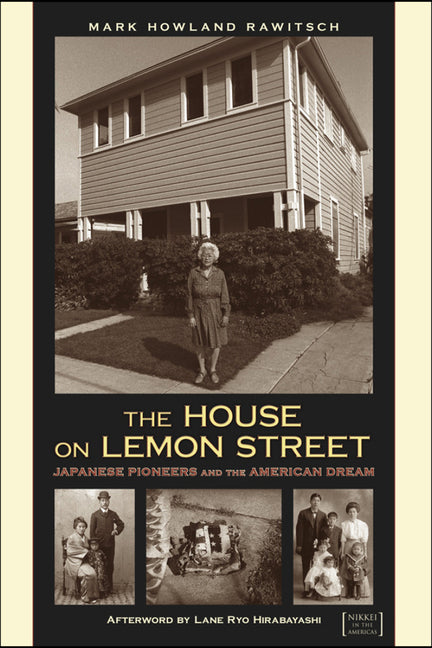
Bringing this little-known story to light, The House on Lemon Street details the Haradas' decision to fight for the American dream. Chronicling their experiences from their immigration to the United States through their legal battle over their home, their incarceration during World War II, and their lives after the war, this book tells the story of the family's participation in the struggle for human and civil rights, social justice, property and legal rights, and fair treatment of immigrants in the United States.
The Harada family's quest for acceptance illuminates the deep underpinnings of anti-Asian animus, which set the stage for Executive Order 9066, and recognizes fundamental elements of our nation's anti-immigrant history that continue to shape the American story. It will be worthwhile for anyone interested in the Japanese American experience in the twentieth century, immigration history, public history, and law.
This publication was made possible with the support of Naomi, Kathleen, Ken, and Paul Harada, who donated funds in memory of their father, Harold Shigetaka Harada, honoring his quest for justice and civil rights. Additional support for this publication was also provided, in part, by UCLA's Aratani Endowed Chair as well as Wallace T. Kido, Joel B. Klein, Elizabeth A. Uno, and Rosalind K. Uno.
About the Author
About the Author
Critical Reviews
Critical Reviews
--J. T. Rasel, Choice "Rawitsch teaches that history, the creation of history, and preserving our history occur in our backyard, not in some far-off place."
--Susan Hasegawa, San Diego City College
"The book makes a significant contribution to the historiography of Japanese Americans and to the burgeoning field of object studies that scholars and history aficionados alike will appreciate"--Kristen Hayashi, The Journal of Asian American Studies "[A] highly engaging history of the California Japanese."
--Sandra Dallas, The Denver Post
"Mark Rawitsch's The House on Lemon Street ranks with Valerie Matsumoto's Farming the Home Place, Yasuko Takezawa's Breaking the Silence, and Linda Tamura's Nikkei Soldiers Break Their Silence as among the very best books in Japanese American studies to simultaneously make a major contribution to that field of study plus local and public history. What the sterling works by Matsumoto, Takezawa, and Tamura accomplished for Cortez, California; Seattle, Washington; and Hood River, Oregon--to render these sites touchstones of Nikkei history and memory--Rawitsch has done for Riverside, California."
--Art Hansen, Professor Emeritus of History and Asian American Studies, and past director, Center for Oral and Public History at California State University, Fullerton
--Meredith Oda, Western Historical Quarterly
Publishing Information
Publishing Information

The Allstora Membership
Membership Perks:
- Save 30% on all online store purchases
- Exclusive access to author's content
- You pay less, but authors still earn double
Membership Terms:
- To access membership discount simply log in and add to cart, discount applied automatically.
- One month free trial, cancel anytime. Membership renews on the 15th of each month.