Ginseng Diggers: A History of Root and Herb Gathering in Appalachia


Ginseng Diggers: A History of Root and Herb Gathering in Appalachia
Ginseng Diggers: A History of Root and Herb Gathering in Appalachia
Description
Description
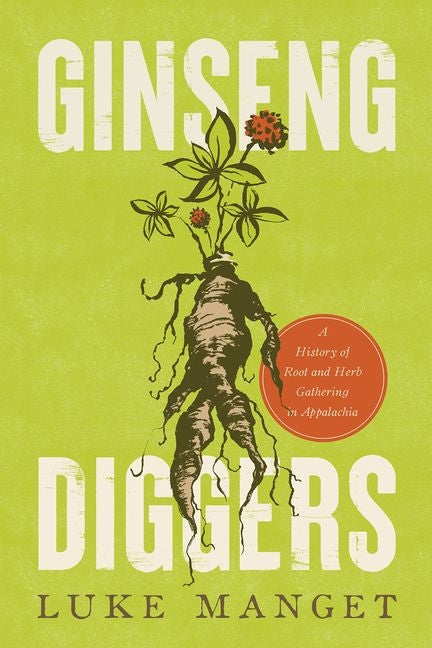
The harvesting of wild American ginseng ( panax quinquefolium), the gnarled, aromatic herb known for its therapeutic and healing properties, is deeply rooted in North America, but nowhere has it played a more important role than in the southern and central Appalachian Mountains. Made possible by a trans-Pacific trade network that connected the region to East Asian markets, ginseng was but one of several medicinal Appalachian plants that entered international webs of exchange. As the production of patent medicines and botanical pharmaceutical products escalated in the mid- to late-nineteenth century, southern Appalachia emerged as the United States' most prolific supplier of many species of medicinal plants. The region achieved this distinction due to both its biodiversity and the persistence of certain common rights that guaranteed widespread access to the forested mountainsides, regardless of who owned the land.
Following the Civil War, root digging and herb gathering became one of the most important ways landless and smallholding families earned income from the forest commons. This boom influenced class relations, gender roles, forest use, and outside perceptions of Appalachia, and it began a widespread renegotiation of common rights that eventually curtailed access to some plants such as ginseng.
Based on extensive research into the business records of mountain entrepreneurs, country stores, and pharmaceutical companies, Ginseng Diggers: A History of Root and Herb Gathering in Appalachia is the first book to unearth the unique relationship between the Appalachian region and the global trade in medicinal plants. Historian Luke Manget expands our understanding of the gathering commons by exploring how and why Appalachia became the nation's premier purveyor of botanical drugs in the late nineteenth century and how the trade influenced the way human residents of the region interacted with each other and with the forests around them.
About the Author
About the Author
Luke Manget is an assistant professor of history at Dalton State College in Dalton, Georgia. He is a contributor in Southern Communities: Identity, Conflict, and Memory in the Nineteenth-Century American South, edited by Steven E. Nash and Bruce E. Stewart.
Critical Reviews
Critical Reviews
On rare occasions a book comes along that totally revises how we look at important historical issues. Luke Manget's Ginseng Diggers is such a book, providing crucial new insights into Appalachian subsistence practices. Manget opens up a whole new world of root and herb gathering, the business surrounding it, and the commons practices that made it possible. A must-read for scholars of Appalachia and anyone interested in the region's culture and history.
--Daniel S. Pierce, author of Tar Heel Lightnin'Manget's impressive research in merchant records, correspondence, diaries, and local newspapers provides a fascinating glimpse at the evolution of ginseng culture in Appalachia and its connection to the national economy and society. A major addition to our understanding of land use, the role of the commons, and capitalism in the mountains.
--Ronald D. Eller, Distinguished Professor Emeritus at the University of Kentucky and author of Uneven GroundWith careful research and engaging prose, Luke Manget unravels the fascinating story of American ginseng and those who harvested it and other medicinal plants from mountain forests. Devoting equal time to both people and nature, the author provides a fresh environmental context for considering issues crucial to Appalachian history, including the changing forest commons and the vagaries of capitalism in small communities. This is a must-read for anyone interested in ecology, economics, and the enduring legacy of the Appalachian 'sang digger.'
--Timothy Silver, author of Mount Mitchell and the Black Mountains and coauthor of An Environmental History of the Civil WarMeticulously researched and beautifully written, Ginseng Diggers is a tour de force in the still-emerging field of US commons history. Manget guides us surefootedly through nineteenth-century Appalachian forests, excavating the intricate ecologies, economies, and cultural contexts medicinal plant gatherers routinely navigated. A worthwhile read for anyone interested in imagining more sustainable futures, Ginseng Diggers makes vital contributions to the histories of medicine and capitalism as well as to environmental history and Appalachian studies.
--Kathryn Newfont, author of Blue Ridge Commons and coeditor of The Land SpeaksLike Jessica Wilkerson's study of Appalachian women devoted to social justice and labor activism, To Live Here, You Have to Fight, and the indispensable, wide-ranging anthology Appalachian Reckoning, Luke Manget's study joins a number of books in recent years that challenge reductive narratives about Appalachia's cultural and economic history. Ginseng Diggers belongs in any library of books devoted to this necessary course correction.
-- "Chapter 16"The impressive and extensive use of primary and secondary sources, documented with copious footnotes (some of which read like brief essays on their own) is tempered by Manget's engaging gift of storytelling. . . . A great read for anyone interested in the history, culture, and ecology of the Appalachian region.
--Betty J. Belanus, Smithsonian Center for Folklife and Cultural HeritageGinseng Diggers demonstrates that people find small avenues for persistence, just as ginseng and other threatened plants somehow do themselves. . . . Manget's book, centered on a humble (but medically efficacious) plant, is a fine Appalachian history.
--T.R.C. Hutton, Journal of Southern HistoryA powerful account. . . . In a region historically plagued by extractive industry, new interpretations of capitalism may be exactly what is needed. For that, Ginseng Diggers is an impressive step forward.
--Riccardo D'Amato, Register of the Kentucky Historical SocietyManget's book could be considered . . . a fine addition to a course on Appalachian studies. It could also lend a human face and historical context to courses on the development of the American economy. . . . a great read for anyone interested in the history, culture, and ecology of the Appalachian region.
-- "Journal of American Folklore"Ginseng Diggers begins to illustrate how the interconnection between East Asian markets and Appalachian medicinal remedies influences the perception of Appalachia while intimately addressing topics on gender roles, class relations, forest use, and commons management. . . . It's written so well that you'd think this unmatched understanding of Ginseng was simple knowledge, but it's the first of its kind. It's relevant, original, globally thinking, and it's simply Appalachian.
--Loyal Jones Appalachian Center at Berea CollegeA model of the kind of Appalachian history the world needs now, Luke Manget's Ginseng Diggers uses seemingly lifeless documents, such as business ledgers, to resurrect a practice and a way of life that, as he points out, is best understood as dynamic. By contextualizing the work of diggers within local, regional, national, and global historical trends, Magnet shows how plant collectors participated in what Anna Tsing calls 'salvage capitalism, ' while he deconstructs mischaracterizations of these important but mostly unsung actors in Appalachian history. By building up a better understanding of how various individuals made use of the commons, Ginseng Diggers illustrates how mountain people played a central role in the development of botanical medicine--a story that extends far beyond the mountains and one that continues to have an impact on contemporary Appalachia.
--Jeffrey A. Keith, professor of global studies at Warren Wilson CollegeManget puts a new focus on Appalachian and American history through the lens of 'commons commodities' (herbs and plants that through customary use belong to the gatherers and not to the landowners). He shows how these herbs, bolstered by early America's Jacksonian democracy and religious individualism, helped revolutionize American medicine. Furthermore, he describes how these 'commodities' enabled the formation of supply chains from the gatherers all the way to the metropolis and beyond and permitted the region to survive and contribute to the war efforts in the Civil War and World War I. Manget looks particularly at ginseng whose final destination was China but whose great monetary value helped the gatherers to somewhat overcome the circumscription of the commons by state laws and the physical destruction of the commons set in motion by the coming of the railroad and extractive industries. But ginseng's symbolic value as a symbol of the wilderness was also large, and although the figure of the 'sang digger' appeared in the late 19th century popular press in the shadow of the hillbilly stereotype, even in some local color novels these figures, though subordinate to characters representing technological progress, served as a counterbalance to the overcivilized American psyche. This renegotiation of gender (and the varied gender roles over time relating to ginseng as described throughout the book), is supplemented by the author in his epilogue by a renegotiation of class, specifically the labor class, which he feels the economy of 'commons commodities' can serve as a model for, believing that the commons can be preserved without being exhausted through self-interest and discounting efficiency as a sole model.
--Dykeman C. Stokely, founder of Wakestone BooksLuke Manget convincingly argues in Ginseng Diggers: A History of Root and Herb Gathering in Appalachia [that] this rugged rural region has a century-long history of linkages with global trade networks extending to east Asia through the harvest, sale, and exchange of American ginseng (Panax quinquefolius). . . . Ginseng Diggers is of obvious interest to scholars who study woodland medicinal plants, as well as anyone who is interested in the tensions that emerge between communities dependent on commons resources and regulatory regimes intent on limiting access, whether through privatization, conservation restrictions, or other mechanisms. Ginseng Diggers also joins other recent publications in Appalachian studies that push back against common narratives that paint poor mountain people as ignorant and destructive. Though Manget's study is specific to Appalachia, there are many parallels to the trends Manget describes in resource-dependent communities elsewhere in the world.
-- "Economic Botany"
Publishing Information
Publishing Information

The Allstora Membership
Membership Perks:
- Save 30% on all online store purchases
- Exclusive access to author's content
- You pay less, but authors still earn double
Membership Terms:
- To access membership discount simply log in and add to cart, discount applied automatically.
- One month free trial, cancel anytime. Membership renews on the 15th of each month.